
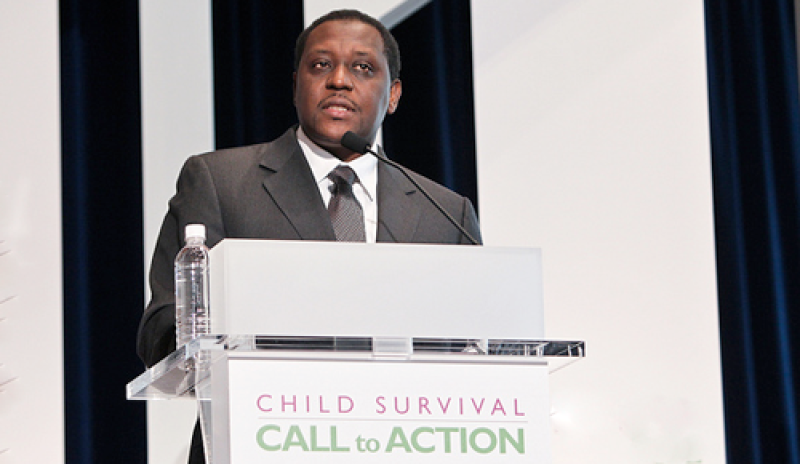
With great concern for the situation of the Nigerian health system, and the sudden exit of a visionary State health minister, it is important to look into possible setbacks the initiatives under him may suffer, and the implications on our struggling health sector.
Wednesday 24th July 2013 came with a big bang in the Nigeria’s health sector. Dr Ali Muhammad Ali Pate, immediate past Minister of State for Health announced his resignation from the federal cabinet of President Jonathan.For those who know him as one of the most vibrant and proactive personalities to hold that position, they were really disappointed, more so because he resigned to pick a job in America as a professor at Duke University Global Health Institute and would participate in a university-wide Africa initiative and also serves as Senior Adviser to Bill and Melinda Gates Foundation based in Washington DC.As someone who shadowed the health sector in Nigeria for over 11 years, my understanding is that, the teaching position he picked in USA wasn’t the reason he resigned but only provided an exit plan for him as he quitted the ministerial position that gave him the opportunity to serve Nigeria in the best way he could.It was an open secret in the health sector for a long time that Dr Pate and the senior minister of health Professor Christian Onyebuchi Chukwu didn’t see eye to eye on many policy issues. Reportedly, it was the frosty relationship characterised by protracted battle for supremacy and wits that pushed Dr Pate out.He wasn’t happy. He wanted to do so much and needed an enabling environment to implement a lot of health agenda but, regrettably, the internal politics within the health sector wouldn’t allow him do that.It is pertinent to review many of the work Dr Pate was doing when he tendered his resignation and to begin to ponder the implication to future implementation of such tasks.He was coordinating the implementation of the Saving One Million Lives Initiative in line with the United Nation Commission of life-saving commodities.In May 2013 in Geneva at the 66th World Health Assembly, Nigeria was reportedly applauded by the World Health Organisation (WHO) and delegates to the 66th World Health Assembly (WHA) for leading global efforts aimed at reducing mother and child deaths.The country was commended for its success of the “Save One Million Lives Initiative” launched last year by President Goodluck Jonathan for saving 218,000 lives, putting one million women on antenatal care, reaching 46 million under-five children with Vitamin A supplementation, and achieving 78 per cent Routine Immunisation (RI) coverage within one year.Dr Muhammad Ali Pate was singled out for special commendation at a high level side event for ministers and senior participants and called ‘Super hero’ for what Nigeria achieved.Another effort he supervised is the Midwives Service Scheme and SURE P- MCH Programme, which have also registered success but of course not without challenges.In a paper Dr Pate presented at the Women Deliver Conference in Kuala Lumpur, on Tuesday 28th May 2013: “Expanding Access: Reaching the Hard to Reach; Insights from the Saving One Million Lives Initiative”, he provided more insight about the work of the Midwives Service Scheme and SURE P- MCH Programme.The paper observed that “with funding from the MDG Debt Relief Grant, the Federal Government of Nigeria established the Midwives Service Scheme (MSS) in 2009 to address the high rates of maternal and neonatal mortality in the country. The paper also looked at enhancing access to basic primary care interventions, improving the quality of care and unlocking the market potential of the private health sector through “Saving One Million Lives Initiative" by a coalition of public and private sector partners to expand access to basic services through strengthening primary health care and providing integrated care at the frontline as well as effort by SURE P - MCH to scale up the activities of Midwives Service Scheme to 2,500 PHCs in 2013.Another important work under his supervision was the implementation of the road map for the 7 thematic areas in response to Nigeria’s commitment to United Nations Commission on Information and Accountanlity with focus on women’s and children’s health.It is expected that Nigeria would establish an independent ‘‘Expert Review Group’’ who would be reporting regularly to the United Nations Secretary-General on the results and resources and on progress in implementing the Commission’s recommendations. A lot of interventions to implement with Dr Pate before his exit.One area that also requires observation is the Nigeria’s commitment to global effort to improve chances of women's survival through improved funding of current annual commitment of US$3 million for the procurement of reproductive health commodities to an additional US$8,350,000 annually over the next four years, making a total of US$33,400,000.It is expected that with that additional resources, we are committed to achieving the goal of a contraceptive prevalence rate (CPR) of 36 percent by 2018 and ensure adequate commodities in our health facilities.Dr Pate, during his exit, naively offered the continuation of his service on part-time basis as the chairman of the Presidential Task Force on Polio Eradication and the public-private coalition for Saving One Million Lives Initiative. I do not see him achieving that on part time basis, as the same reason that forced his exit will equally frustrate that kind gesture.In conclusion, as the saying goes ‘Soldier goes, soldier comes, but the barrack remains’. I hope whoever is appointed the next Minister of State for Health will appreciate the enormous task of the office and hit the ground running immediately to start recording success.