
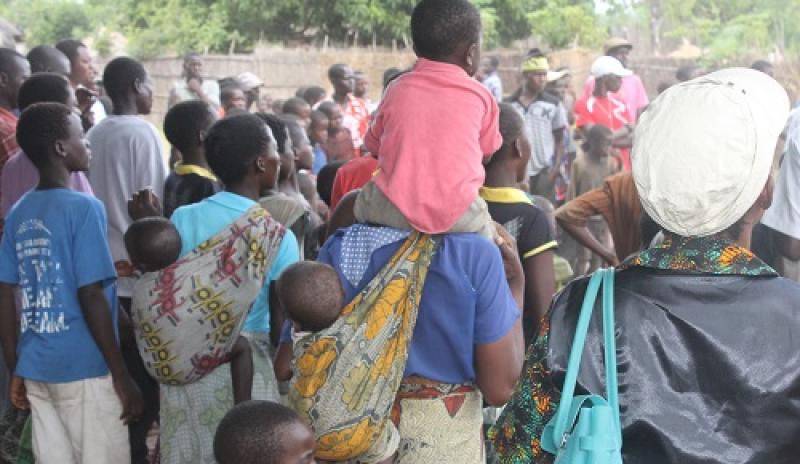
Malawi is said to be among the eight countries in the world with high fertility rate. Despite all the efforts to promote family planning, a Malawian woman on average still prides herself in having more than five children. This is how sad the situation is to an extent that few months ago, a local newspaper shocked the country when it carried a headline saying, "Malawi Produces more than 500 babies per Year!".During a public lecture which took place at University of Malawi's Kamuzu College of Nursing, DFIDs Chief Scientific Advisor, Professor Christopher Whitty, in his presentation, "Changing Global Demography and What this Means for Malawi", emphasized the need for policy makers to be careful with this precarious trend as it directly impact on economic growth of the country.While Malawi's fertility rate is not showing much positive changes, Professor Whitty presented several countries in almost similar social economic status as Malawi and others in more struggling situations doing well. Djibouti, Ethiopia, Pakistan, Lesotho and Afghanistan are some of the countries that have reduced their fertility rates by 30% and more amid difficult social challenges including war and famine.The situation in Malawi, according to Professor Whitty's presentation becomes even more worrisome when thought in terms of population density ( number of people per sq. kilometer). A comparison between Malawi and Tanzania showed that Malawi (118, 000 sq.km) has more people living on a square kilometer around 200, while Tanzania (947,303 sq.km) has around 50 people per square kilometer. The projection in these two countries further showed that, by 2050 Tanzania will have slightly over 150 people per kilometer while Malawi will be hosting around 400.Professor Address Malata of KCN in her presentation "Challenges Facing the Healthcare System in Malawi and its Relation to Demography", directly reminded the audience of the key challenges facing the healthcare system in Malawi. Dubbed as the Big Five; the challenges she presented were; resources, disease burden, population, governance and research. Her presentation was emotionally well presented as she reminded the delegates how Malawi policies are failing to provide quality healthcare services especially to women.The sad end note of the day was the fact that amidst the chaos in our healthcare system, Malawians are still adding more dependants on its meagre resources creating a mist of effectively taming the Big Five.The lecture was attended by a cross section of delegates that included the members of diplomatic missions, donors, NGOs, members of parliament, Kamuzu Central Hospital staff, government departments, KCN students and the guest of honor was the former Vice President of the Republic of Malawi, Justin Malewezi.
Malawi is said to be among the eight countries in the world with high fertility rate. Despite all the efforts to promote family planning, a Malawian woman on average still prides herself in having more than five children.