
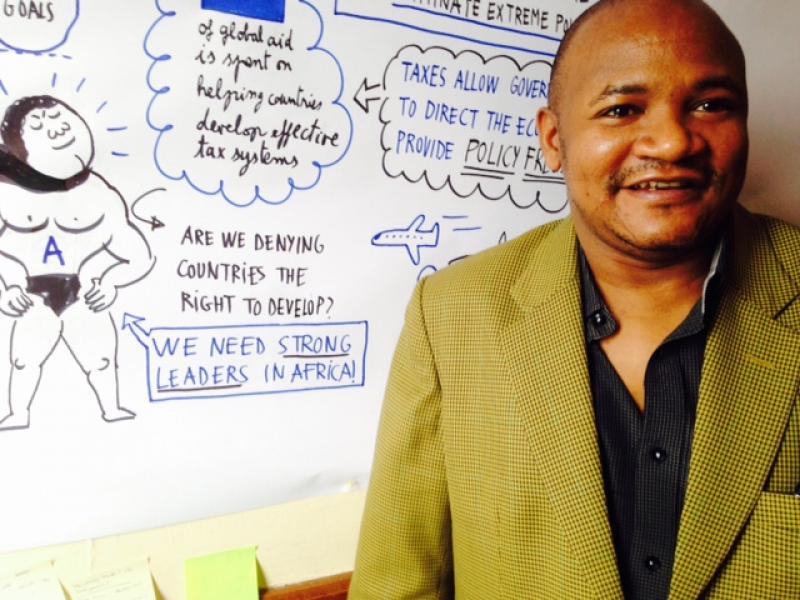
Last week we attended the Financing the Future conference organised by the Overseas Development Institute and African Centre for Economic Transformation in Accra, Ghana. Here are some of our key take-aways from the conference.Less than 0.07% of aid is spent on supporting tax systems. Without strong political leadership, staff, and financial resources to collect taxes, countries will not have enough resources to finance their own development, including the health sector. A participant from the Tanzanian Ministry of Finance said: “When people pay taxes, they demand accountability. Any other arrangement undercuts democracy”.This slide from Peter Chowla at UN-DESA describes key issues around illicit financial flows, which cover tax evasion, criminal activity, and corruption. Loss of public revenue due to these activities is very significant and is abetted by poor international coordination of taxes and unequal power relationships between states and multinational enterprises. Learn more here and here.This slide from Peter Rogerson at ODI shows that as countries become richer, aid typically decreases faster than domestic tax revenues rise, leading to a drop in total available revenues to finance public services. This is a key issue for countries who have recently reached lower middle income levels, such as Ghana or Nigeria, as they are suddenly no longer eligible for some grants or cheap loans.This cartoon nicely captures why budget transparency is important for development, including the health sector. If people don’t know where funds go, how can they keep their leaders accountable?Karen Rono at Development Initiatives proudly shows us the upcoming Development Data Hub, which will host information on external and domestic resources, by sector, presented in easily understandable graphics. We’re looking forward to the launch of this amazing platform next month!
Last week we attended the Financing the Future conference organised by the Overseas Development Institute and African Centre for Economic Transformation in Accra, Ghana. Here are some of our key take-aways from the conference.