
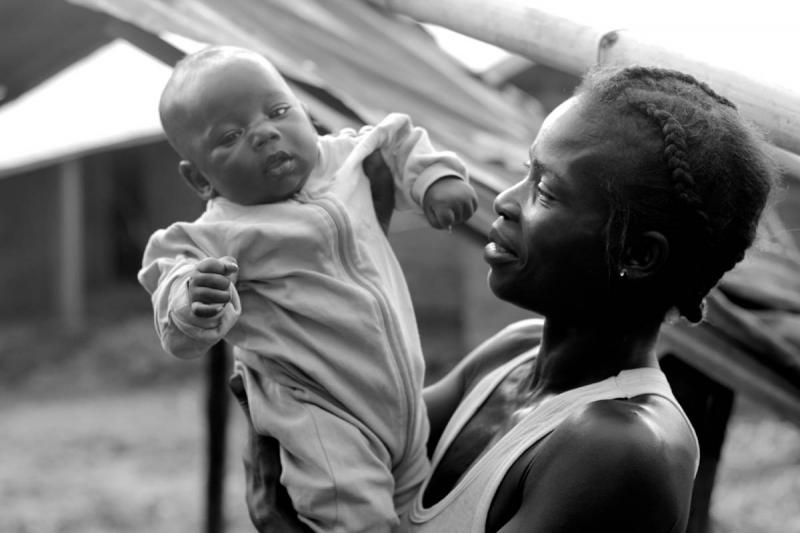
Handicap International has developed a chart that helps to identify normal steps and potential delays in child development.
Handicap International has developed a chart that helps to identify normal steps and potential delays in child development.What is Child Development?
- Changes in the brain, body and feelings that happen from birth to 5 years of age. These demonstrate an increase in the function and independence of the child.
- The process continues until adulthood and has a set pattern/sequence for all children.
- Clear steps (milestones) must occur before others ie. crawling before walking.
- Milestones mark the end of one developmental period and the beginning of another.
- There are typical chronological ages associated with developmental milestones. However, there is considerable variation in the achievement of milestones, some children may achieve them faster others may be a bit slower.
- Some milestones are more variable than others; for example, receptive speech (hearing and repeating sounds/words) do not show much variation among children with typical hearing, but age at walking can vary much more.

- Chronic infection, regular infections
- Weakened immune system
- Malnutrition
- Brain damage
- Toxin exposure
- Anemia
- New mothers should be given the CD chart handout along with their “Under 5 card”
- “Under 5 card” monitors “growth” but CD chart monitors “function or ability”
- PHU staff should explain the chart and give an overview of key milestones
- Parents should then monitor the function (ability) of their children 0-5 years in comparison to the chart
- If they notice any significant delays or delays in several areas (for the child’s age), they should bring the child to health facility for check-up