
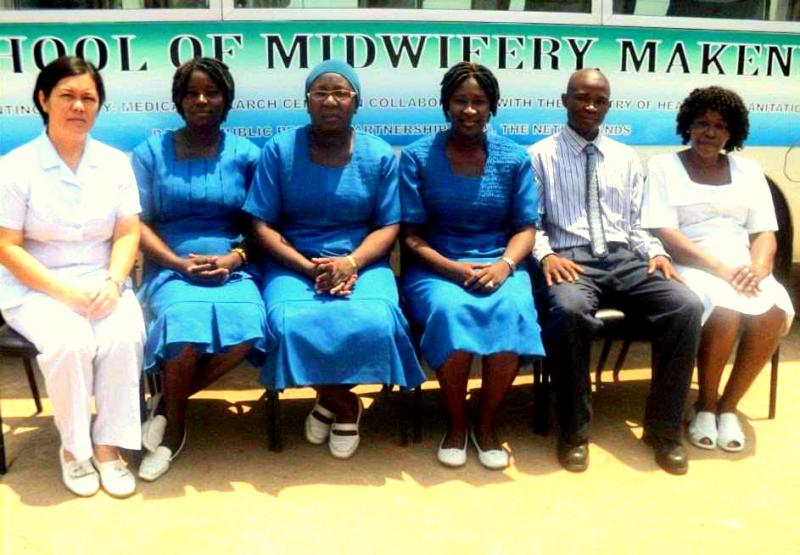
Francess Forna makes an impression because she is clear about her vision. “We want to produce midwives who care, who have solid knowledge of the issues and the practical experience to support that knowledge before they graduate and go directly into the field. This is why I am passionate about ensuring our graduates get the best out of Midwifery school”.
Francess Forna makes an impression because she is clear about her vision. “We want to produce midwives who care, who have solid knowledge of the issues and the practical experience to support that knowledge before they graduate and go directly into the field. This is why I am passionate about ensuring our graduates get the best out of Midwifery school”. Francess Forna , who heads the national midwifery school in Makeni, has over twenty years of knowledge and experience which shapes her acute understanding of the underlying issues of maternal and newborn health in Sierra Leone. “I didn’t intend on becoming a midwife you know. In fact, I did not want to even become a nurse,” she explains. “It just happened that nursing school was shorter than law school”, she recalls with deep laughter, introducing us to a softer side of her no-nonsense presence. “I am grateful every day that this is what influenced my decision to become a nurse, because this is how I found my calling”.Francess tells us about some of her experiences in the twenty years she has worked as a midwife. She talks about the financial and cultural barriers women faced before the free health care initiative was introduced in 2010, and the shortage of clinical staff, especially midwives, in health facilities that led to many birthing complications and several deaths. “I felt for the women, they needed support, not only clinical but also emotional. I felt it every time we lost a woman when we could have saved her, I felt it. This is what inspired me to do midwifery after nursing; I saw the importance of those skill sets in every health facility in this country. We needed to start providing the best care of our women”.When asked about the midwifery school in Makeni and how this was going to influence maternal health, Francess was hopeful that ensuring more midwife graduates will greatly help alter the health landscape and contribute to improving maternal health. “Midwives are more than just clinicians, we are advocates, we are confidants to the women we serve”. This she believes is also what sustains many midwives who work in more remote areas in the country. “The relationship we form with the community becomes a two-way stream: we help take care of them, and they take care of us too by welcoming us in the community”.Francess not only heads the midwifery school but is also invested in creating a midwive working group that exchanges stories and shares techniques based on the gaps they have noticed or highlighting the successes. This working group she hopes will also help influence policy.“Look, my dream, is simple” she clearly states, “child birth needs not be a death sentence for anyone”. One can sense her commitment and strength in the struggle to make things better. “I get great satisfaction when I go to the provinces and women stop me, or sometimes even their husbands stop me and thank me, even at times giving me gifts. Yes, this is why I do it. I do it for my people; it all makes sense when I see what my work is working. I remember that I do this for my people.”