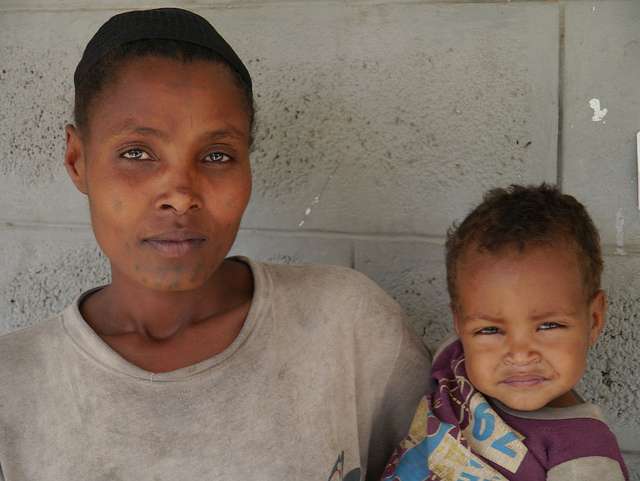
Consequences of maternal mortality on infant and child survival: a 25-year longitudinal analysis in Butajira Ethiopia (1987-2011)
This article assesses survival outcomes for children whose mothers die during or shortly after childbirth in Butajira, Ethiopia. As noted the death of a mother has negative effects on infant and child health, via complications during labour and delivery, infant feeding behaviours, and care for orphans. MethodsData from the Butajira Health and Demographic Surveillance System (HDSS) site was used to estimate survival outcomes for children who were born to mothers who did and did not experience a maternal death. A maternal death was defined as, “a woman’s death within a 42-day window of her most recent childbirth”. The study period included children born between January 1987 and June 2011. Information on household characteristics was also collected. Results
- Between 1987 and 2011, there were 18,189 live births to 5,119 mothers
- 30 mothers of 104 children died within 42 days of childbirth (classified in this study as a maternal death)
- 81% of children whose mothers died within 42 of their birth also died
- This is statistically significantly higher than the proportion of deaths among older children of those women (7% died)
- The proportion of deaths to children whose mothers survived was 9%
- A higher proportion of children died following their mother’s death (maternal and non-maternal deaths) than children of women who survived. This was statistically significant
- Babies of women who survived were about 50 times more likely to survive their first month of life than babies whose mothers died
- This strong mortality effect of a maternal death on her child’s death is only present in the child born in the most recent childbirth. Elder siblings of that child did not show statistically significant differences in their survival compared to children whose mothers survived
- Women from the richest wealth groups were significantly more likely to survive childbirth than women from the poorest groups
- Children who lost a mother were more likely to not receive education compared to children with surviving mothers
These results remained statistically significant when controlling for other factors (such as maternal age, household wealth) that may also be associated with maternal and child mortality. This shows the child deaths are not explained by those factors alone and are likely linked to the maternal death itself.Discussion and conclusion
- The results indicate that there is a very high likelihood of infant mortality following a maternal death.
- The highly increased risks of death for infants of maternal deaths adds to, and even exceeds, findings from different settings. This may be explained by characteristics of childbirth and childcare, as well as household composition and characteristics. In this context, 90% of women gave birth at home, only 25% of births were with a skilled provider; breastfeeding was prompt and near universal. Another study reportedly found most deaths of newborns following a maternal death died after experiencing nutritional deficiency as a result of loss of breastfeeding.
- Many mothers, and consequently babies and children, could be saved by increasing availability and use of emergency obstetric and newborn care
- Socio-economic programmes are needed to support orphaned babies and children, including nutritional support, assistance with education and health care
- Programmes to address upstream risk factors for maternal deaths, including women’s education and economic empowerment, are important for improving the health of mothers and babiesThe authors note that the generalisability of these results should be carefully considered, as contextual factors may be crucial for explaining the result seen here. For example, the institutional delivery rate, the infant feeding practices and the underlying rates of risk factors (e.g. HIV or anemia).
Key quotes from the authors:“Saving mothers means saving children in this study context ” “Infants of women who died during or shortly after childbirth were at significantly and dramatically elevated risk of death when compared to babies whose mothers survived; this relationship persists even after controlling for covariates.” (page 7)(covariates are other factors which may have explained the difference) To read the full article, click here. No subscription is required.Moucheraud, C., Worku, A., Molla, M., Finlay, J. E., Leaning, J., & Yamin, A. (2015). Consequences of maternal mortality on infant and child survival: a 25-year longitudinal analysis in Butajira Ethiopia (1987-2011). Reproductive Health, 12(Suppl 1), S4.
Moucheraud, C., Worku, A., Molla, M., Finlay, J. E., Leaning, J., & Yamin, A. (2015). Consequences of maternal mortality on infant and child survival: a 25-year longitudinal analysis in Butajira Ethiopia (1987-2011). Reproductive Health, 12(Suppl 1), S4.